Product FAQ
When using a shaking table to recover gold, how finely must the gold ore be ground?
When using shaking tables for gold beneficiation, the fineness of grinding is a critical factor. The optimal particle size range for shaking tables is typically between 0.074 mm and 2 mm.
Neither Too Coarse Nor Too Fine
Grinding too coarsely: Gold particles remain attached to the waste rock; since they cannot be effectively liberated, the gold cannot be successfully recovered.
Grinding too finely: This generates an excessive amount of "slimes." These fine particles interfere with the separation process and can carry away minute gold grains, resulting in recovery losses.
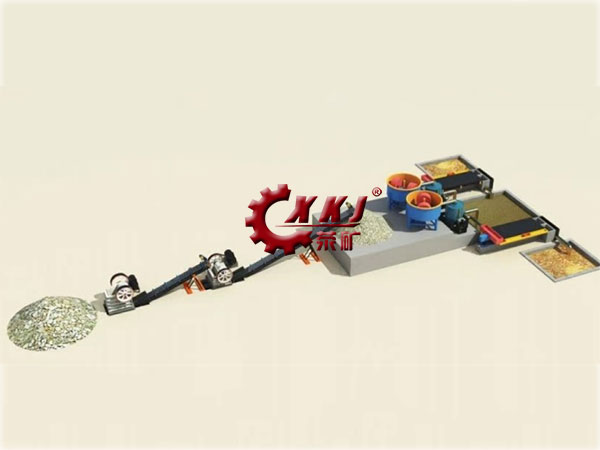
Varying Conditions, Varying Requirements
Standard Operations: Grinding fineness is generally controlled within the 0.074–2 mm range.
Recovery of Fine Gold: This requires finer grinding—typically between 0.074 mm and 0.5 mm—to maximize recovery rates.
Optimal Particle Size Depends on the Ore
Ultimately, the most suitable grinding fineness is determined by the specific characteristics of the ore itself. For instance, ores with a loose structure may require finer grinding, while ores containing other heavy minerals may necessitate adjustments to the fineness to ensure the complete liberation of the gold.
Consequently, there is no single "one-size-fits-all" standard. In actual production practice, it is essential to conduct beneficiation tests to empirically determine the optimal grinding fineness, thereby ensuring the efficient recovery of gold.
Categories
News
Contact Us
Contact: XKJ GROUP
Phone: 0086 138 3714 0277
Tel: 0086 0371-65091987
E-mail: sales01@xkjgroup.com
Add: Xing yang city, Zheng zhou city, Henan province, China